Do Blue Light Blocking Glasses Actually Help You Sleep, or Is That Overstated?
Quick Answer: Blue light blocking glasses can modestly help sleep by reducing how much evening blue light suppresses melatonin production, but the effect is generally smaller than simply dimming screens, using night mode settings, or reducing overall evening screen time — glasses help around the edges rather than being a standalone fix for screen-related sleep problems.
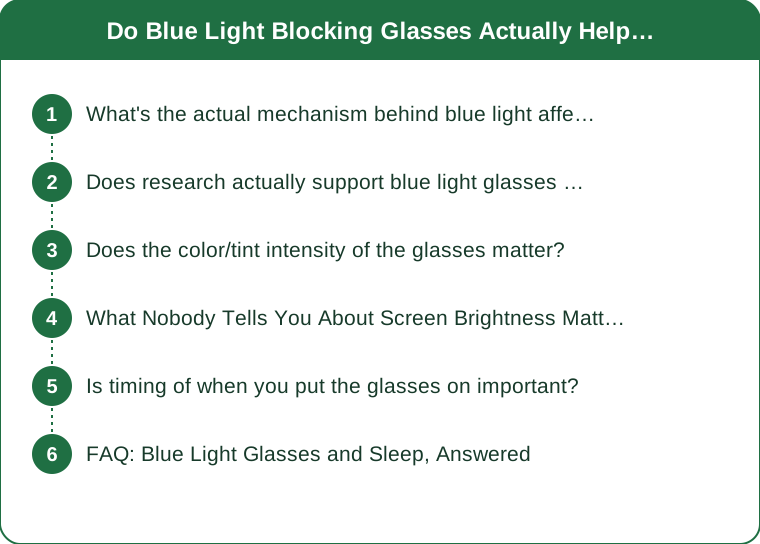
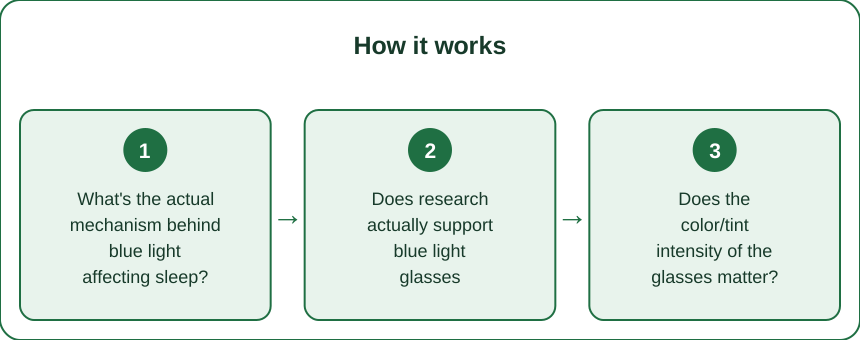
What’s the actual mechanism behind blue light affecting sleep?
Blue wavelength light specifically suppresses melatonin production more than other light wavelengths, and melatonin is the hormone that signals your body it’s time to wind down — evening blue light exposure can delay this signal, pushing back when you naturally start feeling sleepy.
Does research actually support blue light glasses specifically, versus just reducing screen time?
Some studies show measurable melatonin preservation with blue light blocking glasses, though the effect size is generally more modest than headlines suggest, and studies comparing glasses against simply lowering screen brightness or using built-in night-shift settings often find the difference between methods is smaller than expected.
Does the color/tint intensity of the glasses matter?
Yes — stronger amber or orange-tinted lenses block more blue wavelength light than lightly tinted or clear ‘blue light filtering’ glasses, which matters because many budget blue light glasses use minimal tinting that filters only a small percentage of blue light, well below what’s needed for a meaningful melatonin effect.
What Nobody Tells You About Screen Brightness Mattering More
Overall screen brightness and total light exposure often matter as much as or more than blue wavelength specifically — a very bright screen even with blue light filtering can still suppress melatonin through sheer light intensity, which is why dimming screens in the evening is a complementary step, not a replacement, for blue light glasses.
Is timing of when you put the glasses on important?
Putting blue light glasses on 2-3 hours before intended sleep time captures more of the melatonin-sensitive window than putting them on right before bed — melatonin production naturally begins ramping up hours before typical sleep onset, so earlier use targets that window more effectively.
FAQ: Blue Light Glasses and Sleep, Answered
Are blue light glasses worth buying at all, given the modest effect?
For people who use screens heavily in the evening and can’t reduce that habit, glasses are a low-cost, low-effort partial measure worth combining with other steps, rather than a complete solution on their own.
Does using night mode on phones make blue light glasses unnecessary?
Night mode reduces blue light emission somewhat but usually less completely than a well-made blocking lens, so combining both provides more benefit than relying on just one.
Do blue light glasses help with eye strain separately from sleep?
Some people report reduced eye strain from extended screen use with blue light glasses, though this is a separate benefit from the sleep-specific melatonin effect and has its own more mixed evidence base.
TL;DR:
- Blue light glasses modestly help by reducing melatonin suppression from evening screens
- The effect is real but generally smaller than simply dimming screens or reducing evening use
- Lens tint strength matters — lightly tinted glasses filter far less blue light than amber lenses
- Wearing them 2-3 hours before bed targets the melatonin window more effectively than last-minute use
They’re a genuine, modest piece of the puzzle — not a substitute for cutting evening screen brightness and overall exposure.
Keep Reading
This article is for general informational purposes only and is not medical advice. Always consult a qualified health professional for guidance specific to you.