Why Morning Light — Not Just Evening Darkness — Is the Missing Piece of Your Sleep Routine
Quick Answer: Bright morning light exposure — ideally within an hour of waking — helps set your circadian clock, which strengthens the timing of your body’s natural melatonin release that night. Get 10-15 minutes of outdoor light in the morning, and evening sleep hygiene works significantly better.
Most sleep advice is entirely about the evening: dim the lights, put the phone away, cool the room down. All useful — and all treating only half of what actually sets your sleep clock. The other half happens the moment you wake up.

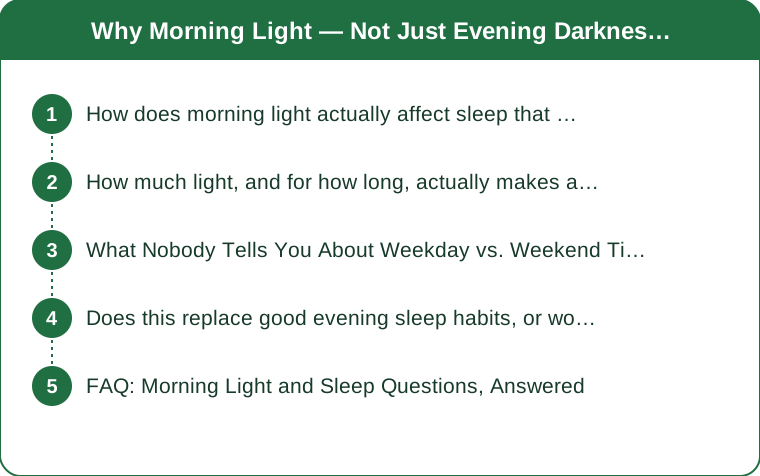
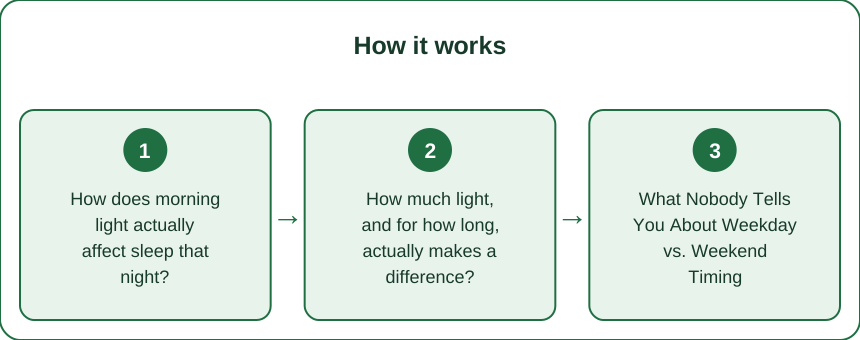
How does morning light actually affect sleep that night?
Your circadian clock — the internal system that governs when you feel sleepy versus alert — is primarily set by light exposure timing, especially bright light in the first hour or two after waking. That morning light signal tells your body roughly ‘14-16 hours from now, start releasing melatonin.’
Without a strong morning light signal, that internal clock drifts and weakens, making the evening melatonin release later, dimmer, or less consistent — even if your evening routine is otherwise perfect.
How much light, and for how long, actually makes a difference?
10-15 minutes of outdoor light, even on an overcast day, is dramatically brighter than any indoor lighting — outdoor light on a cloudy day still measures far higher in lux than typical indoor lighting. A walk, coffee on a porch, or simply standing by an open window all count.
Indoor light through a window filters out a meaningful portion of the intensity, so actually stepping outside, even briefly, works better than looking out from indoors.

What Nobody Tells You About Weekday vs. Weekend Timing
Here’s the detail that quietly undoes a lot of otherwise good sleep habits: sleeping in on weekends and skipping morning light shifts your circadian clock, a pattern sometimes called social jetlag. Waking up 2-3 hours later on weekends is functionally similar to crossing a time zone, and it can make Sunday and Monday night sleep noticeably worse.
Keeping wake time within about an hour of your weekday schedule, even on days off, protects the consistency that makes morning light exposure actually work.
Does this replace good evening sleep habits, or work alongside them?
Alongside — not instead of. Morning light strengthens the timing signal; evening habits (dim lights, cool room, limited screens before bed) protect that signal from being disrupted right before sleep. Doing only one half tends to produce inconsistent results, which is often why people feel like they’ve ‘tried everything’ for sleep and still struggle.
FAQ: Morning Light and Sleep Questions, Answered
What if I can’t get outside in the morning — will indoor light work?
It helps somewhat, but less effectively — sit as close to a bright window as possible, or consider a light therapy lamp (10,000 lux) for 15-20 minutes if outdoor access is genuinely limited.
How soon will I notice a difference in my sleep?
Many people notice easier wake-ups and steadier energy within 1-2 weeks of consistent morning light, with sleep onset improvements often following shortly after.
Does this work the same in winter with less daylight?
It’s more important in winter, not less — shorter days mean weaker natural light signals overall, so intentional morning outdoor time (or a light therapy lamp) matters even more during winter months.
TL;DR:
- Morning light sets your circadian clock, which governs how well your evening melatonin release works
- Get 10-15 minutes of actual outdoor light within an hour of waking, even on cloudy days
- Weekend sleep-ins without morning light create ‘social jetlag’ that worsens Sunday/Monday sleep
- Morning light and evening sleep hygiene work together — neither fully works alone
Tomorrow morning, step outside for 10 minutes before checking your phone. It’s one of the highest-leverage sleep habits most routines skip entirely.
Keep Reading
This article is for general informational purposes only and is not medical advice. Always consult a qualified health professional for guidance specific to you.