Does a Weighted Blanket Actually Help You Sleep, or Is It Just a Cozy Placebo?
Quick Answer: Weighted blankets work through deep pressure stimulation, which can lower physiological arousal and help some people fall asleep faster or feel calmer, especially those with anxiety. The effect is real but modest for most people, not a guaranteed fix for insomnia.
Every gift guide pushes a weighted blanket as the answer to bad sleep. The honest answer is more nuanced: it genuinely helps a real subset of people, and does very little for others, depending on what’s actually keeping you up.

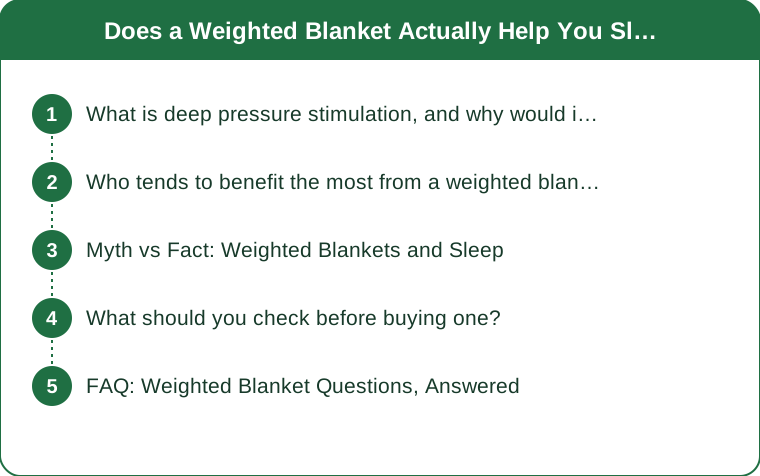
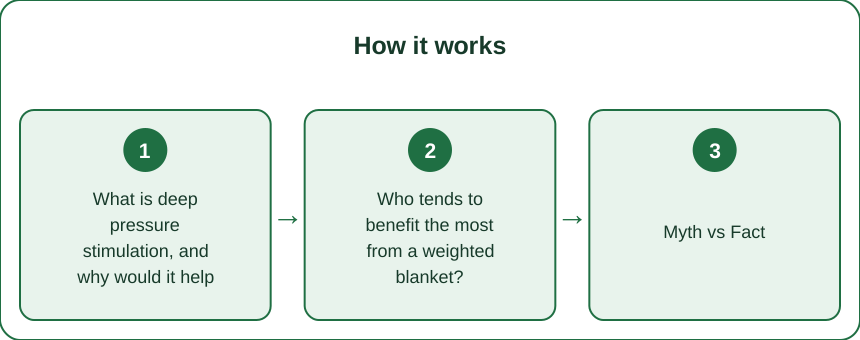
What is deep pressure stimulation, and why would it help sleep?
Deep pressure stimulation is the sensation of firm, evenly distributed pressure across your body — similar to a firm hug or swaddle. Some research links this kind of input to a reduction in physiological arousal signals, which can translate to a calmer nervous system state that’s easier to fall asleep from.
This mechanism appears most helpful for people whose sleep trouble is tied to anxiety or restlessness, rather than people whose insomnia stems from other causes like pain, screen habits, or an irregular schedule. It’s the same general principle behind swaddling infants or the calming effect some people feel from a firm hug during a stressful moment.
Who tends to benefit the most from a weighted blanket?
People with anxiety-related sleep difficulty, and some individuals with sensory processing differences, tend to report the most noticeable benefit. If your main sleep barrier is a racing mind at bedtime rather than physical discomfort or environmental factors, a weighted blanket is addressing a mechanism that’s actually relevant to your problem.
If your sleep issue is more about temperature, noise, or an inconsistent bedtime, a weighted blanket isn’t targeting the actual cause — it might feel nice, but it won’t fix the root issue. In that case, it’s worth addressing the actual barrier directly (a fan, blackout curtains, a fixed wake time) rather than expecting the blanket alone to compensate for it.

Myth vs Fact: Weighted Blankets and Sleep
Myth: Heavier is always better. Fact: Most guidance suggests around 10% of your body weight — going significantly heavier can feel restrictive rather than calming, and disrupt sleep instead of improving it.
Myth: Weighted blankets cure insomnia. Fact: They may help you fall asleep more easily in some cases, but they don’t address underlying causes like sleep apnea, irregular schedules, or chronic pain.
Myth: They work the same for everyone. Fact: Response varies widely — some people find them calming and others find them claustrophobic or overheating, especially in warmer climates or seasons.
What should you check before buying one?
Pick a weight around 10% of your body weight, check the fabric for breathability if you sleep warm, and consider trying a lighter option first if you’re unsure how you’ll respond to the pressure sensation. Many people who dislike a too-heavy blanket actually enjoy a lighter weighted option they simply hadn’t tried.
If you run hot at night already, a weighted blanket can compound overheating — look specifically for cooling or breathable fabric versions rather than a standard cotton or fleece fill. A generous return policy is also worth checking, since the only reliable way to know if the pressure sensation works for you is to actually sleep under it for a few nights.
FAQ: Weighted Blanket Questions, Answered
How heavy should a weighted blanket be?
A common guideline is roughly 10% of your body weight, though personal preference plays a real role — start closer to that number and adjust based on comfort.
Can weighted blankets help with anxiety outside of sleep?
Some people use them during the day for general calming, and the same deep pressure mechanism applies, though evidence is strongest around bedtime use specifically.
Are weighted blankets safe for everyone?
Most healthy adults can use them safely, but people with certain respiratory conditions, mobility limitations, or young children should check with a doctor first. This is general information, not medical advice.
TL;DR:
- Weighted blankets work through deep pressure stimulation, which can lower arousal and help some people relax
- They help most with anxiety-driven sleep trouble, less with pain, temperature, or schedule-driven issues
- Aim for roughly 10% of your body weight, not heavier
- They’re a real tool for some people, not a universal insomnia fix
If a racing mind is your bedtime problem, a weighted blanket is worth trying. If it’s something else keeping you up, look there first. This is general information, not medical advice.
Keep Reading
This article is for general informational purposes only and is not medical advice. Always consult a qualified health professional for guidance specific to you.