Why a Perfectly Cold Bedroom Still Fails to Help You Sleep If Your Feet Stay Cold
Turning the thermostat down is supposed to be the reliable fix for restless nights, and a genuinely cold bedroom does help most people fall asleep faster, but that same cold room can backfire completely if the feet are still cold underneath the blanket, because the actual trigger for sleep onset isn’t room temperature at all — it’s whether the body can shed heat through the hands and feet.

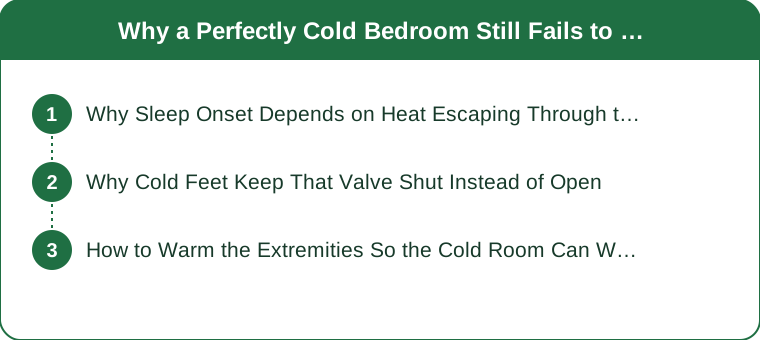
Why Sleep Onset Depends on Heat Escaping Through the Feet
The trigger: falling-asleep-requires-core-body-temperature-to-drop-by-roughly-one-to-two-degrees-a-shift-driven-mainly-by-blood-vessels-in-the-hands-and-feet-dilating-to-release-heat (falling asleep requiring core body temperature to drop by roughly one to two degrees, a shift that is driven mainly by blood vessels in the hands and feet dilating wide open specifically to release stored heat out through the skin, per the sleep-environment-guide logic — falling-asleep-requiring-core-body-temperature-to-drop-by-roughly-one-to-two-degrees-a-shift-driven-mainly-by-blood-vessels-in-the-hands-and-feet-dilating-wide-open-specifically-to-release-stored-heat-out-through-the-skin), and the reframe (the feet functioning as the body’s actual heat-release valve, not just cold extremities to ignore)).

Why Cold Feet Keep That Valve Shut Instead of Open
The block: when-the-feet-are-already-cold-the-bodys-instinct-is-to-constrict-those-same-blood-vessels-to-conserve-heat-which-blocks-the-exact-release-mechanism-sleep-onset-depends-on (when the feet are already cold, the body’s automatic instinct is to constrict those very same blood vessels to conserve remaining heat, which directly blocks the exact release mechanism that sleep onset actually depends on, per the how-to-sleep-better-guide logic — when-the-feet-are-already-cold-the-bodys-automatic-instinct-is-to-constrict-those-same-blood-vessels-to-conserve-heat-which-directly-blocks-the-release-mechanism-sleep-onset-depends-on), and the frame (a cold room working against itself the moment cold feet trigger heat conservation instead of release)).
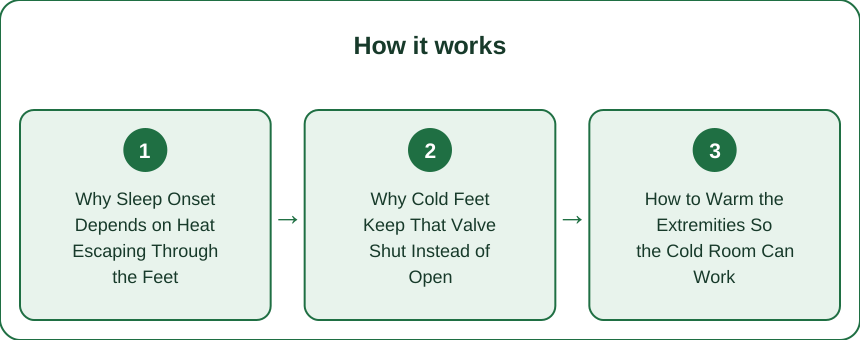
How to Warm the Extremities So the Cold Room Can Work
The fix: wearing-loose-socks-or-using-a-hot-water-bottle-at-the-feet-before-bed-warms-the-skin-enough-to-let-those-vessels-dilate-and-release-heat-even-while-the-room-itself-stays-cold (wearing loose socks to bed, or using a hot water bottle placed at the feet beforehand, warms the skin there just enough to let those blood vessels dilate and actually release heat, even while the room around the body stays genuinely cold, per the bedtime-routine-for-better-sleep-guide logic — wearing-loose-socks-or-using-a-hot-water-bottle-at-the-feet-before-bed-warms-the-skin-enough-to-let-those-vessels-dilate-and-release-heat-even-while-the-room-stays-cold), and the frame (warming one small surface deliberately so the whole cooling system downstream can actually function)).
Falling asleep depends on core body temperature dropping by a degree or two, a shift driven mainly by blood vessels in the hands and feet dilating to release heat, but cold feet trigger the opposite instinct — vessel constriction to conserve warmth — which blocks that release even in a genuinely cold room. Wearing loose socks or warming the feet with a hot water bottle before bed lets those vessels dilate and do their job, making the cold room finally work the way it was supposed to instead of fighting cold feet for the same effect.
Keep Reading
This article is for general informational purposes only and is not medical advice. Always consult a qualified health professional for guidance specific to you.