Why a Cooler Room Does More for Your Sleep Than Almost Any Other Single Change
Quick Answer: Core body temperature needs to drop by roughly 1-2 degrees to initiate and maintain deep sleep, and a bedroom that’s too warm actively works against this natural process regardless of how good your other sleep habits are — which is why temperature adjustment (generally 60-67°F / 15-19°C for most people) tends to produce a more noticeable, immediate improvement than many other commonly recommended sleep hygiene changes.
A lot of sleep advice competes for attention, but temperature is one of the few changes with a direct physiological mechanism working in its favor from the first night.

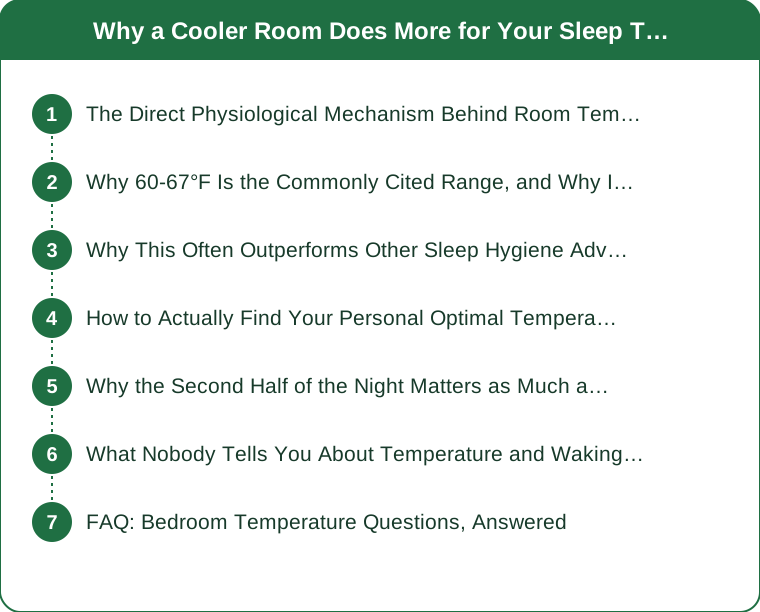
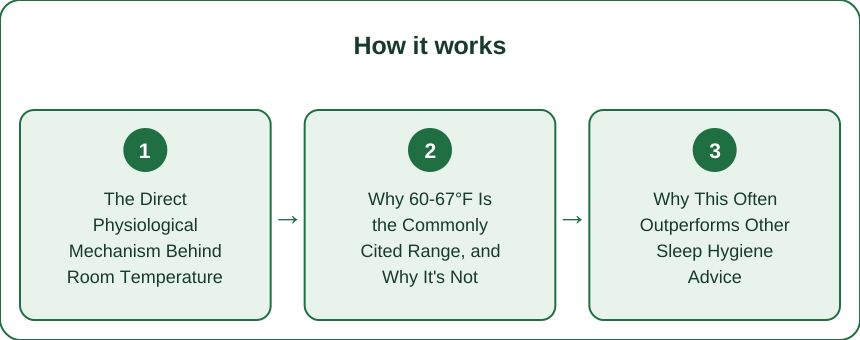
The Direct Physiological Mechanism Behind Room Temperature
Your body’s natural sleep onset process involves a drop in core temperature, signaled partly by peripheral blood vessels dilating to release heat through the skin — a warm room works directly against this mechanism by making that heat release harder, which can delay sleep onset and disrupt the deeper sleep stages even if you do eventually fall asleep. This isn’t a comfort preference; it’s a measurable physiological process that a too-warm environment actively interferes with.
Why 60-67°F Is the Commonly Cited Range, and Why It’s Not Universal
This range comes from research on average adult thermal comfort combined with the temperature drop needed for optimal sleep architecture, but individual variation is real — body composition, what you’re wearing to bed, mattress and bedding materials, and personal preference all shift where in (or outside) that range someone actually sleeps best. Treating 65°F as a strict target rather than a starting point to adjust from is a common mistake.
Why This Often Outperforms Other Sleep Hygiene Advice
Common recommendations like avoiding screens before bed, maintaining a consistent sleep schedule, or reducing caffeine all genuinely help, but they generally require sustained behavior change over days or weeks to show a clear effect. Temperature adjustment, by contrast, can produce a noticeably better night’s sleep on the very first night it’s changed, since it’s addressing a direct physiological mechanism rather than a behavioral pattern that needs to build up an effect.

How to Actually Find Your Personal Optimal Temperature
Testing in 2-degree increments over a week or two, tracking subjective sleep quality (or using a sleep tracker if available), is a more reliable way to find your actual optimal temperature than assuming the commonly cited range applies exactly to you. Factors like sleeping with a partner who has different temperature preferences, seasonal bedding changes, or sleepwear choice all factor into where your personal number actually lands.
Why the Second Half of the Night Matters as Much as Falling Asleep
A room that starts cool but warms up overnight (common with poor ventilation or heavy bedding) can disrupt the deeper sleep stages that occur more heavily in the second half of the night, even if sleep onset was easy. This is why some people who fall asleep fine still wake up feeling unrested — the room temperature problem showed up hours after the falling-asleep part, where it’s easy to overlook as the cause.
What Nobody Tells You About Temperature and Waking Up
A slight temperature rise in the early morning hours actually supports natural waking, which is part of why some smart thermostats and sleep tech products deliberately program a gradual overnight temperature increase — a genuinely optimized sleep temperature strategy isn’t just ‘as cold as possible all night,’ but a cooler first half transitioning to a slightly warmer final stretch before waking.
FAQ: Bedroom Temperature Questions, Answered
Is it better to be too cold or too warm if I can’t find the exact right temperature?
Most research suggests being slightly too cool is generally easier for the body to compensate for (with extra bedding) than being slightly too warm, which more directly blocks the core temperature drop needed for sleep.
Do bedding materials matter as much as room temperature?
They interact closely — breathable, moisture-wicking bedding can make a slightly warmer room feel comfortable, while heavy synthetic bedding can undermine even a well-set thermostat.
Does room temperature matter equally for naps and nighttime sleep?
The same general principle applies, though naps are shorter and less dependent on temperature since they don’t cycle through as many full sleep stages as a full night’s sleep does.
TL;DR:
- Core body temperature needs to drop 1-2 degrees to properly initiate and sustain sleep, and a warm room blocks this directly
- The commonly cited 60-67°F range is a starting point, not a universal exact target
- Temperature changes can improve sleep the very first night, unlike many behavior-based sleep hygiene tips
- A room that warms up overnight can disrupt deep sleep even if falling asleep wasn’t a problem
If you’ve tried most of the standard sleep advice without much change, checking and adjusting your room temperature is one of the few remaining changes with a direct, same-night physiological payoff.
Keep Reading
This article is for general informational purposes only and is not medical advice. Always consult a qualified health professional for guidance specific to you.