Why You Wake Up at the Exact Same Time Every Night (3am, 4am, Whatever)
Quick Answer: Waking at a consistent time nightly usually reflects your natural sleep cycle transitions (roughly every 90 minutes) combined with a specific trigger — light sensitivity, temperature drop, or stress — that happens to line up with a lighter sleep stage at that hour. It’s rarely random.
If you wake at 3:47am with suspicious regularity, your brain isn’t malfunctioning on a schedule for no reason — sleep naturally cycles through lighter and deeper stages roughly every 90 minutes, and a consistent external or internal trigger at that particular cycle point is usually what’s tipping you into full wakefulness.

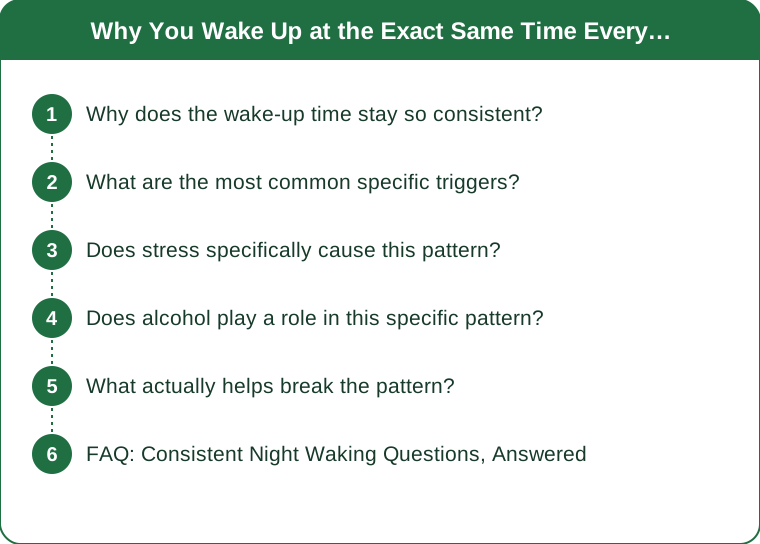
Why does the wake-up time stay so consistent?
Sleep cycles through stages in fairly predictable 90-minute waves across the night, with lighter stages recurring at fairly consistent clock times if your bedtime is consistent. A trigger — a slight temperature change, ambient light shift, or a recurring stress thought — hitting during one of these naturally lighter stages is far more likely to fully wake you than the same trigger during deep sleep.
What are the most common specific triggers?
Room temperature drop (many homes cool several degrees between 2-4am), light changes (streetlight timers, a partner’s phone, early dawn in summer), and cortisol rhythm — your body’s cortisol naturally begins rising in the early morning hours in anticipation of waking, and for some people that rise happens earlier and more sharply than typical, causing a premature full wake rather than a smooth transition toward morning.
Does stress specifically cause this pattern?
Yes, commonly — elevated stress or an active worry can lower your threshold for waking during a light sleep phase, and once awake, the same worry is often what keeps you from falling back asleep quickly. This creates the frustrating loop where the wake-up itself becomes something to stress about, further reinforcing the pattern.

Does alcohol play a role in this specific pattern?
Often, yes — alcohol can help you fall asleep initially but disrupts sleep architecture in the second half of the night as it metabolizes, commonly causing a wake-up several hours after falling asleep. If the wake time correlates with evening drinking, that’s worth testing by removing alcohol for a week to compare.
What actually helps break the pattern?
Address the likely trigger directly: lower bedroom temperature preemptively rather than letting it drop and wake you, block light sources, and if stress is the driver, a specific wind-down practice (writing down tomorrow’s worries before bed) can reduce the mid-night rumination that keeps you awake once triggered.
FAQ: Consistent Night Waking Questions, Answered
Is waking up once a night normal?
Brief awakenings between sleep cycles are actually normal and usually forgotten by morning — the problem is specifically when you’re awake long enough to notice and struggle to fall back asleep.
Should I check the clock when I wake up?
Generally no — checking the time can reinforce anxiety about the pattern and make falling back asleep harder; turn the clock away if this is an issue for you.
When does this pattern warrant seeing a doctor?
If it’s frequent, distressing, associated with snoring or gasping (possible sleep apnea signs), or persists despite addressing temperature, light, and stress, it’s worth discussing with a doctor. This is general information, not medical advice.
TL;DR:
- Consistent nightly wake times usually reflect natural 90-minute sleep cycles meeting a recurring trigger
- Temperature drops, light changes, and cortisol rhythm are the most common specific culprits
- Stress lowers your threshold for waking and makes falling back asleep harder once triggered
- Frequent, distressing waking alongside snoring or gasping deserves a doctor’s look
The consistency itself is a clue — trace it to temperature, light, or stress rather than assuming it’s unexplainable.
Keep Reading
This article is for general informational purposes only and is not medical advice. Always consult a qualified health professional for guidance specific to you.